
Eleh HaDevarim: These Are the Words, These Are the Ships
Ada Sereni's Ships Without a Flag and the Jewish art of retelling

In February 1946, in the Italian port of La Spezia, a ship called the Fede sat under detention, its hold full of Holocaust survivors who had already crossed a continent to get there. Ada Sereni did not have an army. She had a hunger strike, a handful of Haganah volunteers, and a talent for telling powerful men uncomfortable truths to their faces. The ship sailed. It was not the last time her blend of Jewish courage, quiet defiance, and Zionist inspiration moved history forward — and her story lands, this week, on exactly the right page of the Jewish calendar.
This week’s Torah portion is Parashat Devarim, which opens the book of Deuteronomy with one of the most quietly radical moves in the Torah: Moses stops leading, and starts telling. The Israelites are camped on the plains of Moab, at the edge of the Promised Land, forty years after leaving Egypt. Before they cross the Jordan, Moses gathers them and recounts the failures, the rebellions, the fear of the spies who convinced a whole generation not to trust God’s promise, and the hard-won growth of the generation now ready to enter. The portion’s name, and the whole book’s, comes from its opening words: “Eleh HaDevarim” — these are the words. In Jewish tradition, words are not just description; they are how memory survives and how responsibility passes from one generation to the next.
That is precisely the hinge on which Ada Sereni’s life turns. Born in Rome in 1905 into a wealthy Sephardic Jewish family, she gave up a chemistry degree and a comfortable European life to follow her husband Enzo Sereni to Mandate Palestine in 1927. She found pioneer life in Rehovot almost unbearable at first, then helped found Kibbutz Givat Brenner anyway — carrying water in on donkeys, raising three children, running its pomegranate juice factory. She could have lived out an ordinary, honorable pioneer’s life. History had other plans.
The Widow Who Out-Organized an Empire

There is a photograph that does not exist of Ada Sereni standing on an Italian dock in the middle of the night, watching a fishing boat overloaded with Holocaust survivors slip past a British patrol. No camera was there to catch it. But for three years, that scene played out again and again — Jewish heroes, history, and Zionist inspiration converging in…
In 1944, Enzo volunteered for a parachute mission behind Nazi lines in occupied Italy. Ada tried to stop him — the only time in their marriage, she later said, that she ever pushed back against one of his choices. He went anyway, and by November 1944 he was dead, executed at Dachau. Most widows would be forgiven for stepping back. Ada instead traveled into the wreckage of postwar Europe to learn the truth herself, and when she found the German transport register confirming his death in Munich, she did not go home to grieve. She stayed in Italy to smuggle Holocaust survivors past the British blockade toward the Land of Israel
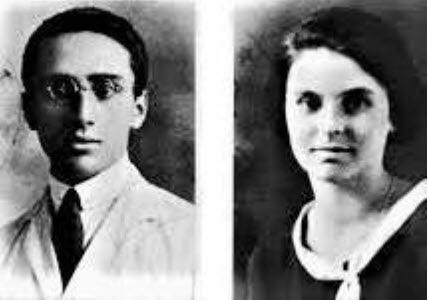
This is where Devarim’s themes stop being metaphor and start being literal. The people Ada carried across the Mediterranean were, in the truest sense, a new generation standing at the edge of a land many had never seen — survivors who needed someone with the courage to move them across the threshold, not just mourn what they had lost. Where the spies in this week’s parsha let fear talk a generation out of entering the promised land, Ada modeled the opposite instinct, choosing forward motion, ship after ship, for three straight years.
By April 1947 she commanded the entire Mossad LeAliyah Bet operation in Italy — one of the only women to lead a Haganah underground network. Her method was almost shockingly direct. Rather than deceive Italian officials, she told them exactly who she was and what she needed.
“My name is Ada Sereni, and I am the head of the organization that helps Jewish refugees in Italy clandestinely get to the Land of Israel. They need your help.”
It worked because she understood something Devarim also teaches: words, spoken plainly at the right moment, can move mountains force alone cannot. Between 1945 and 1948, her network organized as many as 38 voyages, carrying an estimated 28,000 refugees home. Before Israel’s War of Independence, she used the same directness to help stop a ship secretly carrying weapons meant for Israel’s enemies — walking up to an Italian naval officer and telling him the truth about the hold’s cargo.
“We wanted to take the refugees out and they wanted them to go.”
In the truest echo of “Eleh HaDevarim” itself, Ada Sereni eventually sat down and told her own story, publishing her memoir I Clandestini del Mare — Ships Without a Flag — so the crossing she organized would not be lost to the generation after her, just as Moses insisted Israel’s story be spoken aloud before, not after, the people crossed into their inheritance.
Despite organizing one of the largest rescue operations of the postwar period, Sereni’s contribution went so under-recognized that historians later wrote an academic article asking, in its own title, whether she deserved to be called an ‘Unforgettable Heroine.’ In 1995, Israel finally answered with its highest civilian honor, the Israel Prize.
Ada Sereni belongs squarely in the Ziv of Zion tradition of Jewish heroes: not the loudest person in the room, but the one who quietly makes the impossible logistics of Jewish survival happen. She is a bridge between the generation that endured the wilderness and the generation that stands, today, on the other side of the Jordan. At your own Shabbat table this week, over Parashat Devarim, consider sharing her story: the widow who turned a broken heart into 28,000 homecomings, and who reminds the diaspora that entering the land you were promised takes courage — and the will to tell the truth about how you got there.
Subscribe to Ziv of Zion for a new hero and Torah connection every week, and share this one with someone who needs more light at their Shabbat table tonight.
Shabbat Shalom, and Am Yisrael Chai — brighter than ever.
Am Yisrael Chai — And These Are the Reasons Why

The legacy of Israel’s heroes reminds us who we are, where we come from, and what we’re capable achieving together.
She really was the ‘Unforgettable Heroine’.
An amazing, courageous woman who deserves to be known, respected and admired as a true role model.