
The Widow Who Out-Organized an Empire
How Ada Sereni turned grief into one of the great untold rescue stories of Jewish history

There is a photograph that does not exist of Ada Sereni standing on an Italian dock in the middle of the night, watching a fishing boat overloaded with Holocaust survivors slip past a British patrol. No camera was there to catch it. But for three years, that scene played out again and again — Jewish heroes, history, and Zionist inspiration converging in the person of one Italian-Jewish widow who decided that grief was not a place to stay.
Ada Ascarelli was born in Rome in 1905 into a wealthy, cultured Sephardic family, the kind of household with an extensive private library and centuries of Roman Jewish history behind it. She could have lived a comfortable, assimilated Italian life. Instead, as a teenager, she fell for a classmate named Enzo Sereni, already burning with Zionist conviction, and she let his fire become hers. She left a chemistry degree unfinished, married him, and in 1927 sailed for Mandate Palestine with an infant daughter in her arms.
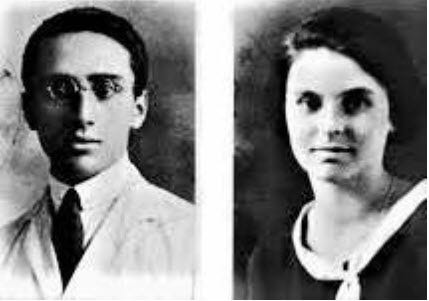
Rehovot, she later admitted, was the hardest chapter of her life. There was no comfort waiting — just orchards, hard labor, and eventually a kibbutz called Givat Brenner that she and Enzo helped found from nothing, carrying water in on donkeys. She ran its pomegranate juice factory and raised three children. For over a decade, her story might have simply been one more dedicated pioneer’s.
Then came 1944. Enzo, working with British-backed efforts to reach Jews trapped in Nazi-occupied Europe, volunteered to parachute behind enemy lines into northern Italy. Ada objected — the only time in their marriage, she later said, that she ever tried to talk him out of a decision.
“That was perhaps the only time I told Enzo not to pursue his choice. He was adamant.”
He jumped anyway, on May 15, 1944. Weeks later, all contact was lost. When the war ended and Enzo was not among the returning prisoners, Ada did not simply wait for news. She secured permission to travel into the ruins of postwar Europe herself, chasing fragments of testimony across a shattered continent — a former prisoner’s memory of a captain who shared his soup ration equally with starving men, a priest’s recollection of a notebook in a language he didn’t recognize. In Munich, she finally found the German transport register. It confirmed what she had feared: Enzo had been executed at Dachau in November 1944.
Most people, having crossed a broken continent to learn how their husband died, would have gone home to grieve. Ada Sereni did something else entirely. She stayed.
She joined the Mossad LeAliyah Bet — the clandestine network smuggling Holocaust survivors past the British blockade toward Palestine — first as second-in-command to the legendary Yehuda Arazi, then, by April 1947, as its outright commander in Italy. One of the only women to lead a Haganah underground operation, she ran it with a method entirely her own: not deception, but disarming honesty. When she needed help from Italian officials, she simply told them the truth.
“My name is Ada Sereni, and I am the head of the organization that helps Jewish refugees in Italy clandestinely get to the Land of Israel. They need your help.”
It worked, again and again. Between 1945 and 1948, Sereni organized somewhere between 33 and 38 clandestine voyages, helping an estimated 28,000 Jewish refugees reach the shores of what would become the State of Israel. When British authorities detained a refugee ship at La Spezia in 1946, she helped orchestrate the standoff that eventually forced its release. In the tense final weeks before Israel’s War of Independence, she used her contacts in the Italian navy to help halt a ship secretly carrying weapons meant for Israel’s enemies — not through subterfuge, but by simply telling a naval officer the truth about what the ship was carrying.
“We wanted to take the refugees out and they wanted them to go.”
That line, more than any other, captures her entire genius: she never had to out-scheme the people standing in her way. She understood them, and she gave them a reason to look the other way.
The State of Israel was declared in May 1948, and Sereni’s last ship sailed openly, no longer in secret. She didn’t stop there — she later supported Jewish emigration from the Soviet Union and helped found the Associazione Italia-Israele. In 1954, tragedy found her family again: her son Daniel was killed in a plane crash during a ceremony honoring his father. She kept going
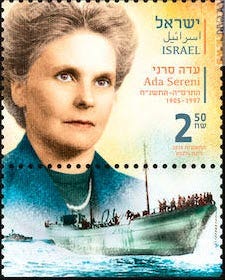
In 1995, the State of Israel awarded Ada Sereni its highest civilian honor, the Israel Prize, for special contribution to society and the country. She died in Jerusalem in 1997, at ninety-two, and was buried at Givat Brenner — the kibbutz she had helped carve out of nothing, seventy years earlier, as a young bride who found the desert unbearable and built a homeland anyway.
Historians studying the founding generation of Israel have a name for how thoroughly Ada Sereni’s contribution was overlooked for decades: one landmark academic article is literally titled ‘Unforgettable Heroine? The Question of Ada Sereni’s Place in the Collective Memory.’ It is long past time to answer that question the way it deserves to be answered.
This is why Ziv of Zion exists — not to argue about Israel, but to make sure that names like Ada Sereni’s travel as far as they should. If her story moved you, share it with someone who needs to hear it, and subscribe so you never miss the next hero waiting to be introduced. We would love to hear in the comments: whose story do you think deserves this same light?
Am Yisrael Chai — And These Are the Reasons Why

The legacy of Israel’s heroes reminds us who we are, where we come from, and what we’re capable achieving together.
Am Yisrael Chai — and brighter than ever.